
Hiller Aviation Museum
Air and Space Camp
Explore the final frontier in a hands-on adventure in astronomy and space travel!
Air and Space Camp Details
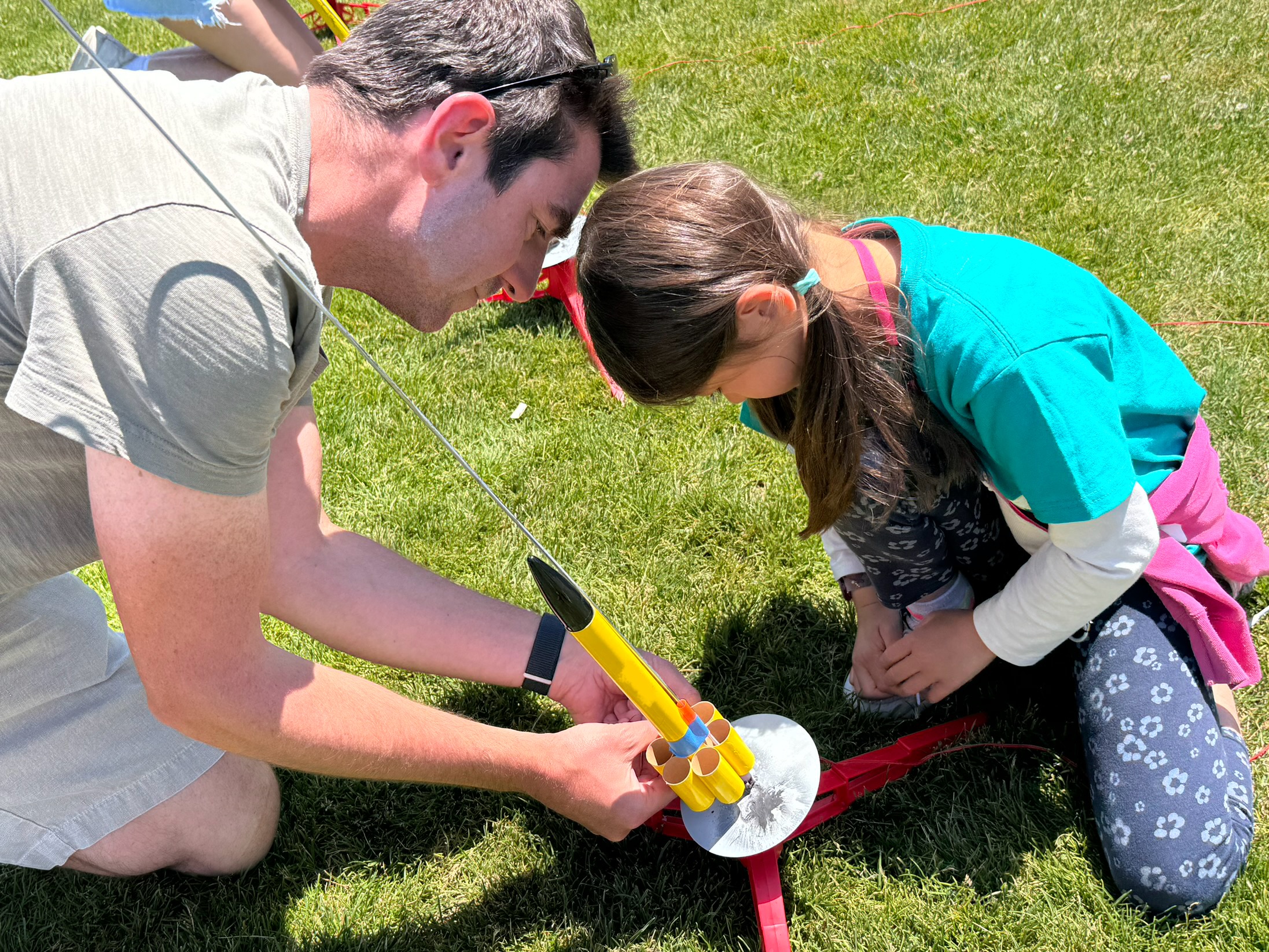
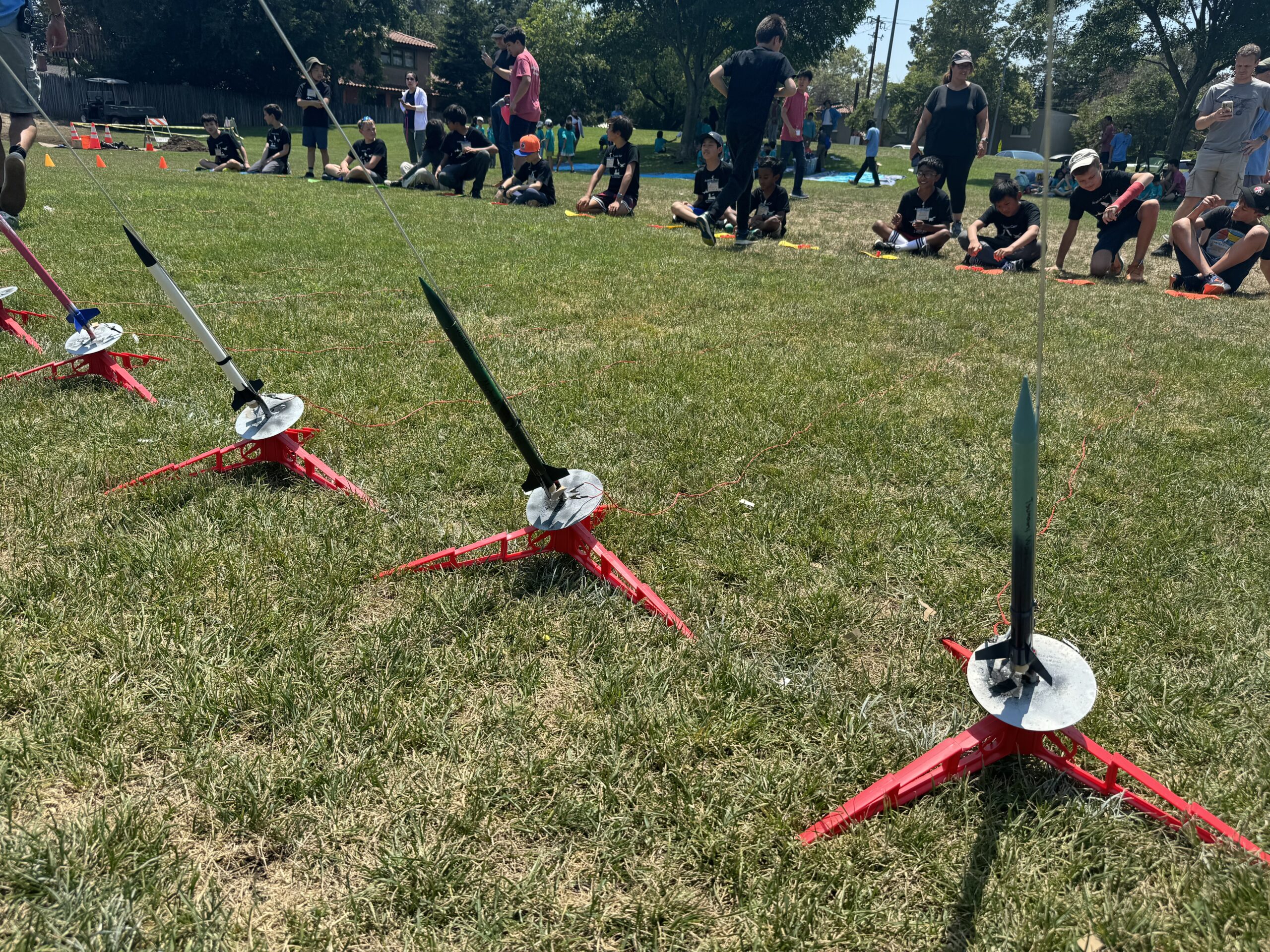
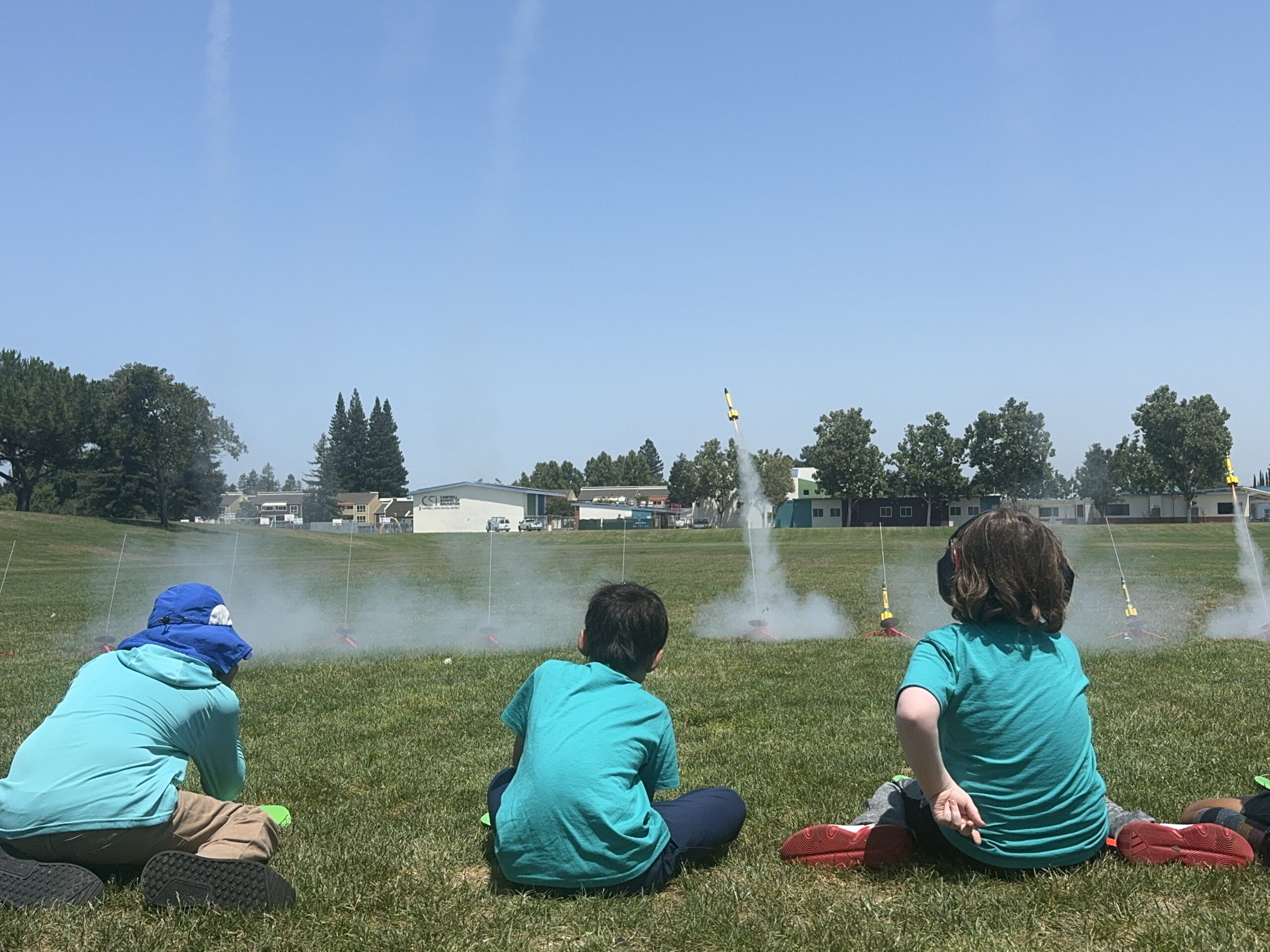
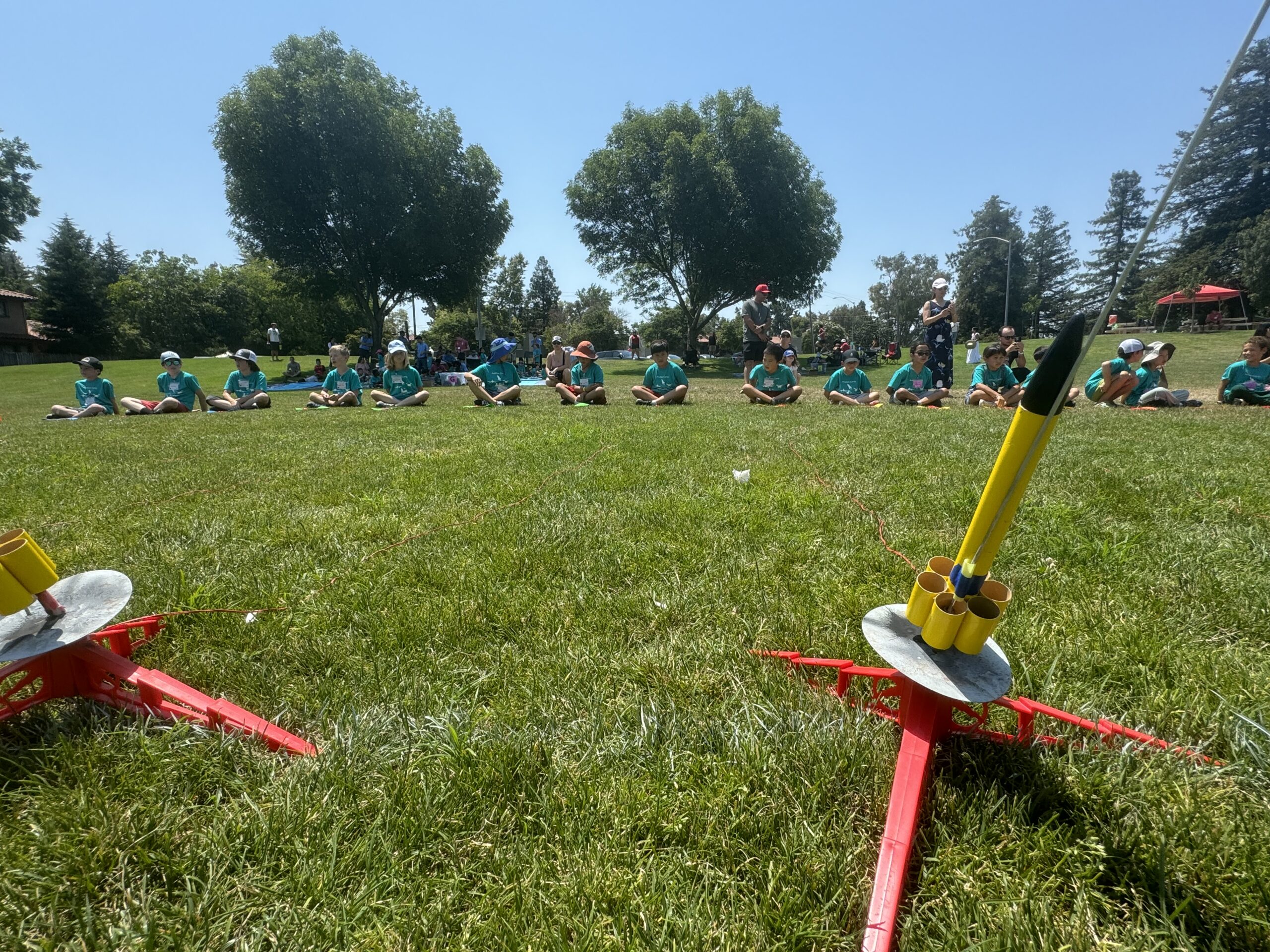
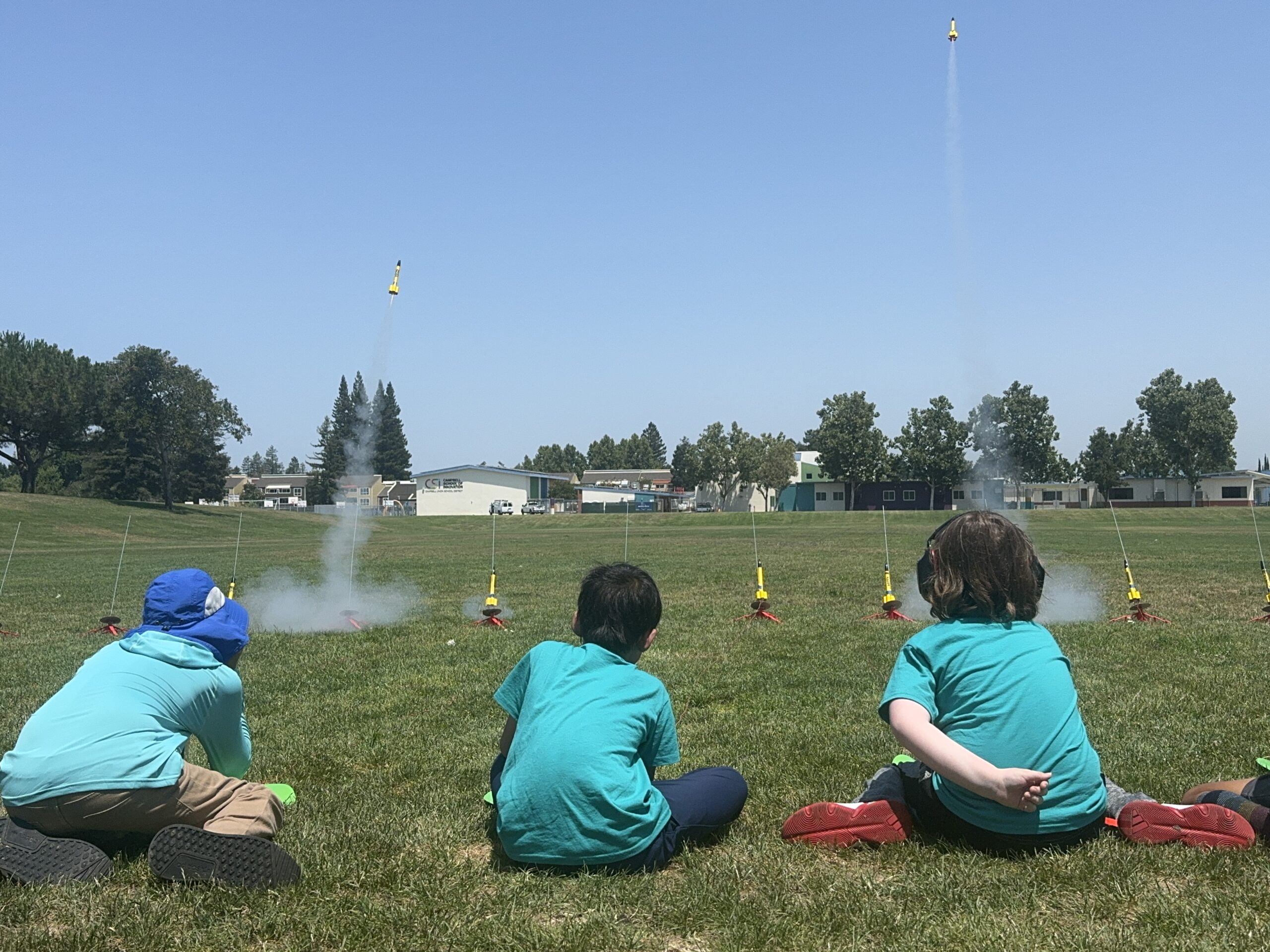
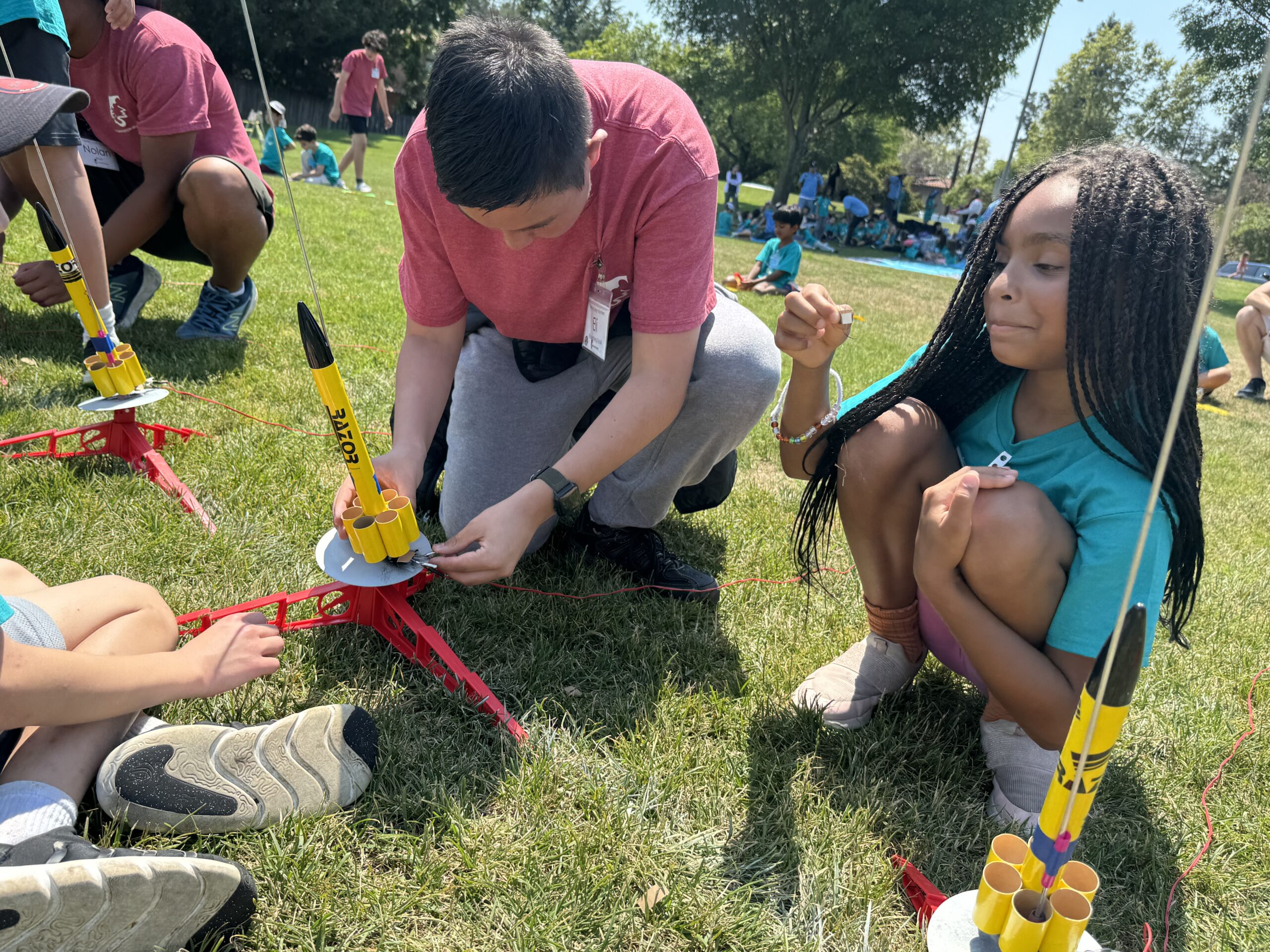
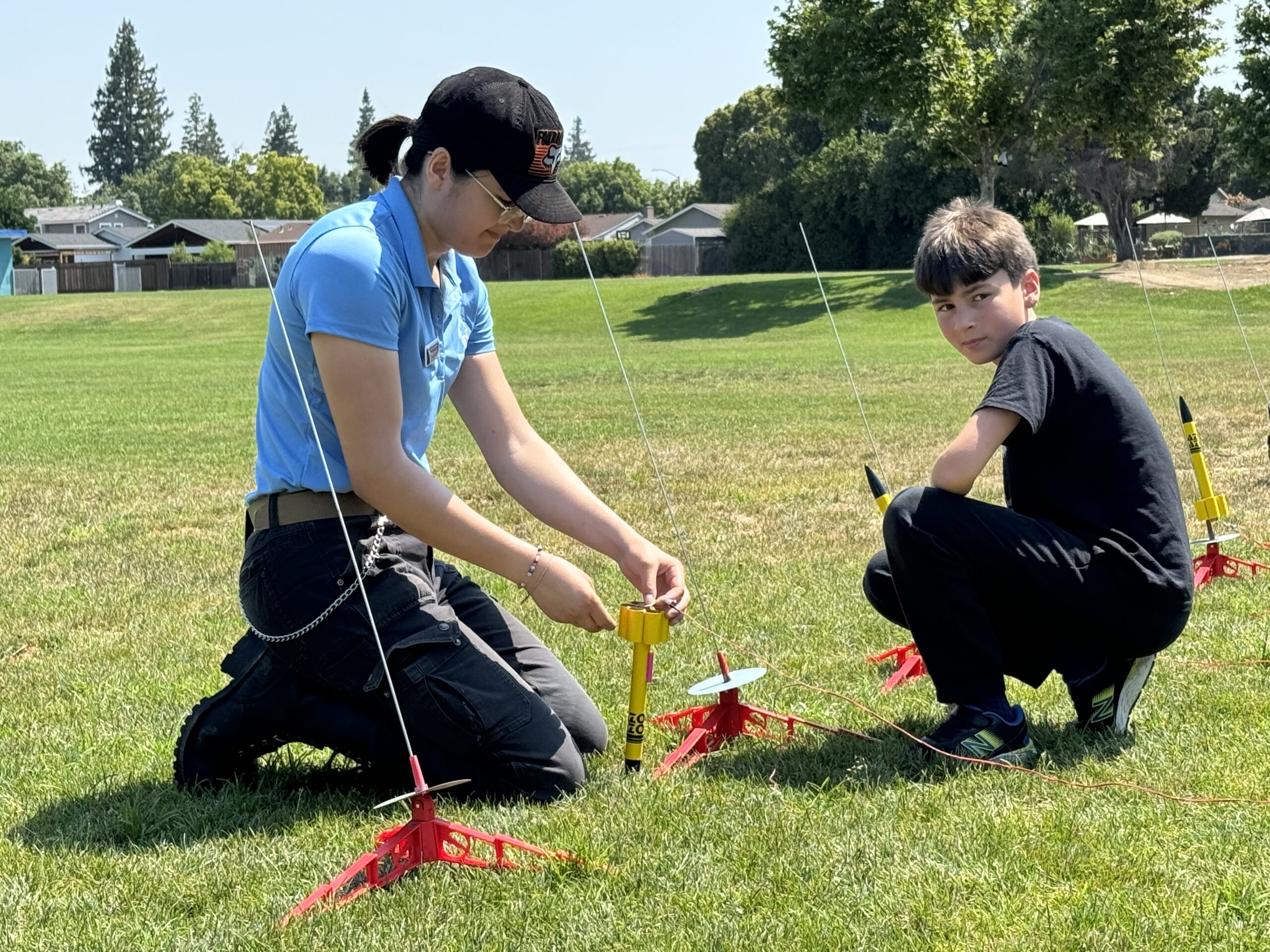
Friday features a field trip to John D. Morgan Park in Campbell, where each child launches their rocket safely under the supervision of Hiller Aviation Museum launch staff.
Throughout the week, campers investigate some of the amazing destinations in space that may be explored through rocket propulsion and space travel. Build a model of our solar system, observe the surface of the Sun, use a refractor telescope, identify constellations in the museum’s Starlab planetarium, command a space shuttle training aircraft in the flight simulators, examine real meteorites, and much more in a thrilling exploration of the universe!
Camp Details
Air & Space Sessions
No dates currently offered
See Camp Calendar for availability.
Field Trip Launch Site Information
On Friday of the camp week, Air & Space and Spaceflight Tech campers will head to the John D. Morgan Park in Campbell to launch their model rockets.
Campers should check in by the regular 9 AM start time at the Hiller Aviation Museum on Friday morning. They will depart the Hiller Aviation Museum via bus promptly at 9:30 AM and return to the Hiller Aviation Museum by 2 PM on Friday afternoon.
Camp activities will continue at the museum until the usual 4 PM pick-up time.
Parents are welcome to attend the rocket launch event! See field trip information letter for more details.
EXAMPLE OF AIR & SPACE CURRICULUM
LESSON |
DESCRIPTION |
| Astronauts | Explored what it’s like to be an astronaut and how people live and work in space. |
| Comets | Learned about comets and created their own comet-inspired craft. |
| Constellations | Observed constellations in the Bay Area night sky in a mobile Starlab planetarium. |
| Drone Plex | Flew a simulated quadcopter and piloted an actual drone through the Drone Plex. |
| Field Trip | Went on a field trip to launch their model rockets. |
| Flight Sims: Intro | Completed introductory flight simulations learning how to fly straight and level, land, and take-off. |
| Flight Sims: Shuttle | Flew a space shuttle training aircraft in the flight simulators. |
| Galaxy | Learned how galaxies form and observed different types of galaxy formations. |
| Gliders – Rocket | Explored glider flight and launched their own rocket-shaped glider. |
| Meteorites | Examined rocks to identify the differences between tektites and meteorites. |
| Moon Phases | Observed the different moon phases. |
| Rockets 1 | Began building their model rocket project. |
| Rockets 2 | Progressed on building their model rocket. |
| Rockets 3 | Finished building their model rockets and reviewed launch day safety guidelines. |
| Solar System | Created a model of the solar system featuring all eight planets. |
| Sun & Ultraviolet Light | Explored the Sun, light, and the ultraviolet spectrum. Experimented with the effects of UV rays with Cyanotype paper and UV beads. |
| Telescopes | Observed how convex and concave lenses work together to magnify faraway objects. |
Air and Space Camp Includes
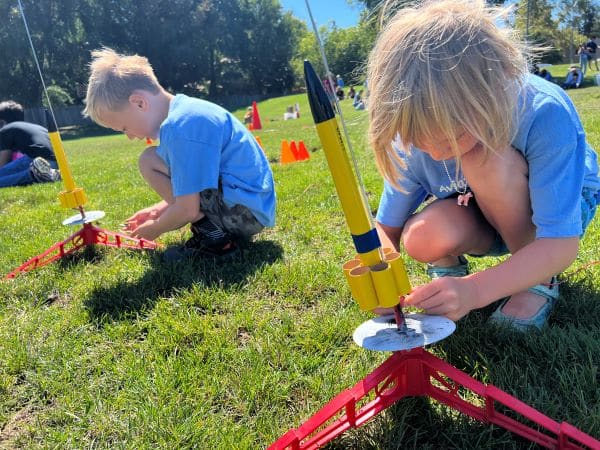
Rocketry
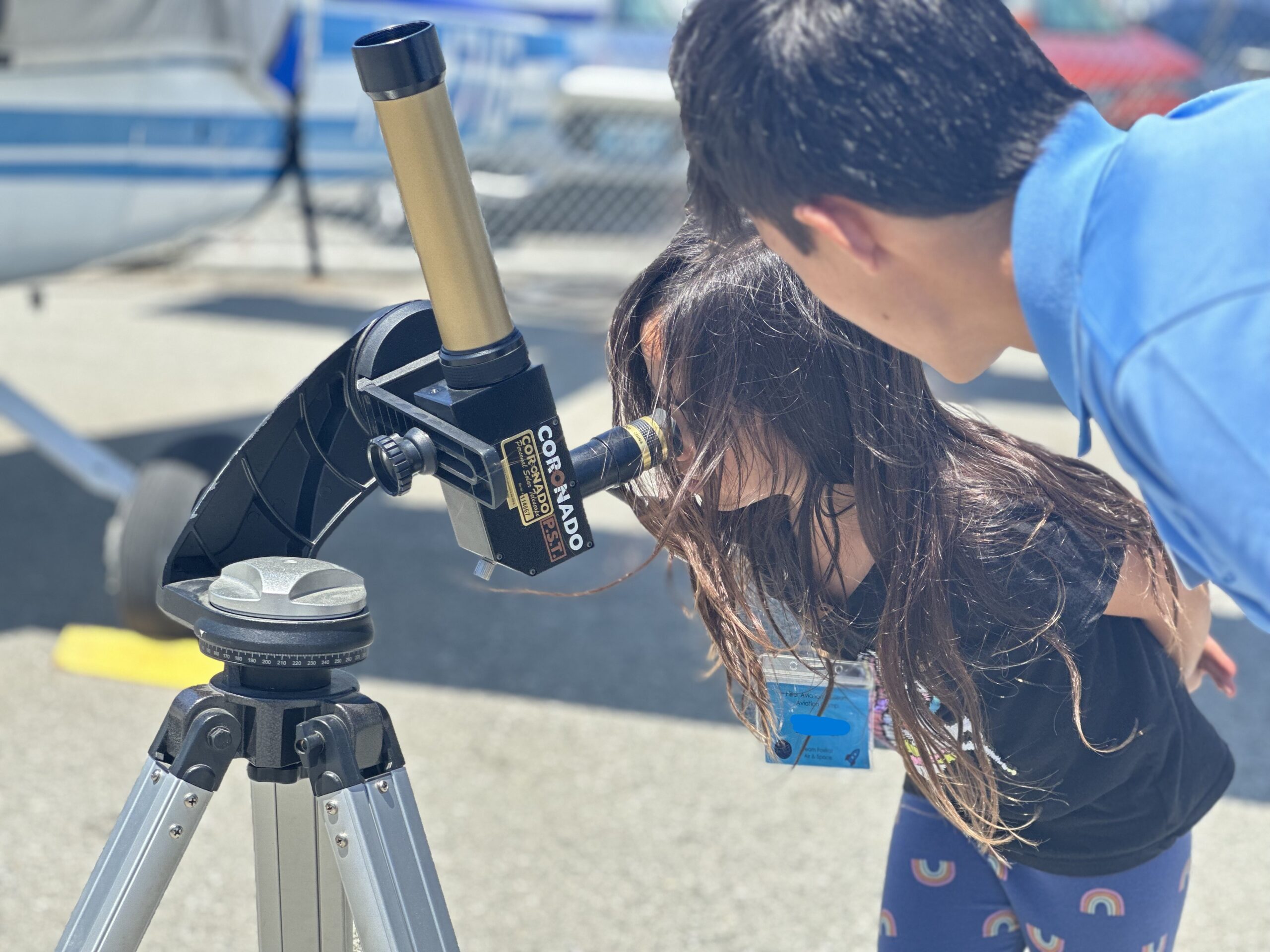
Space Exploration
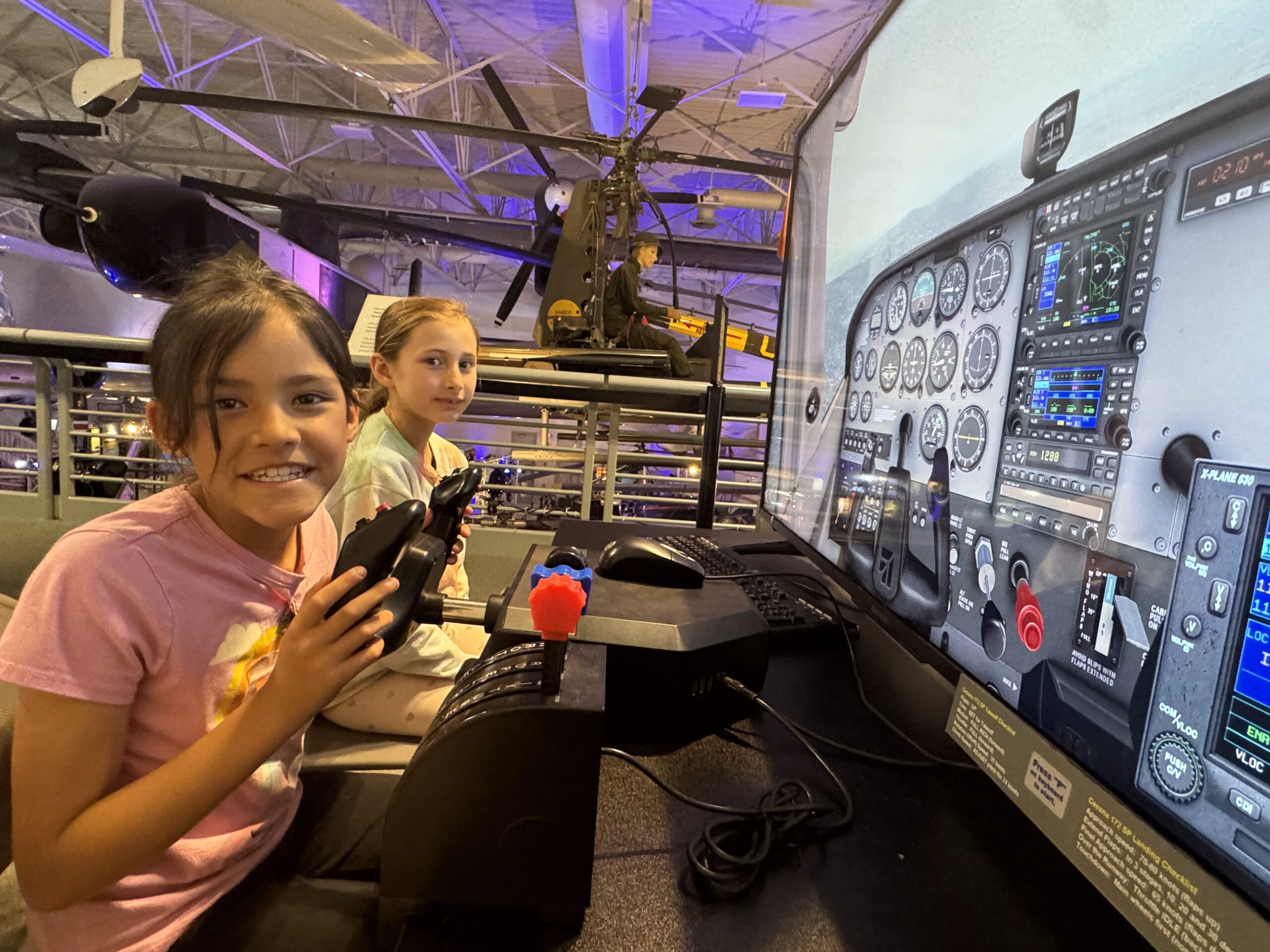
Flight Simulation
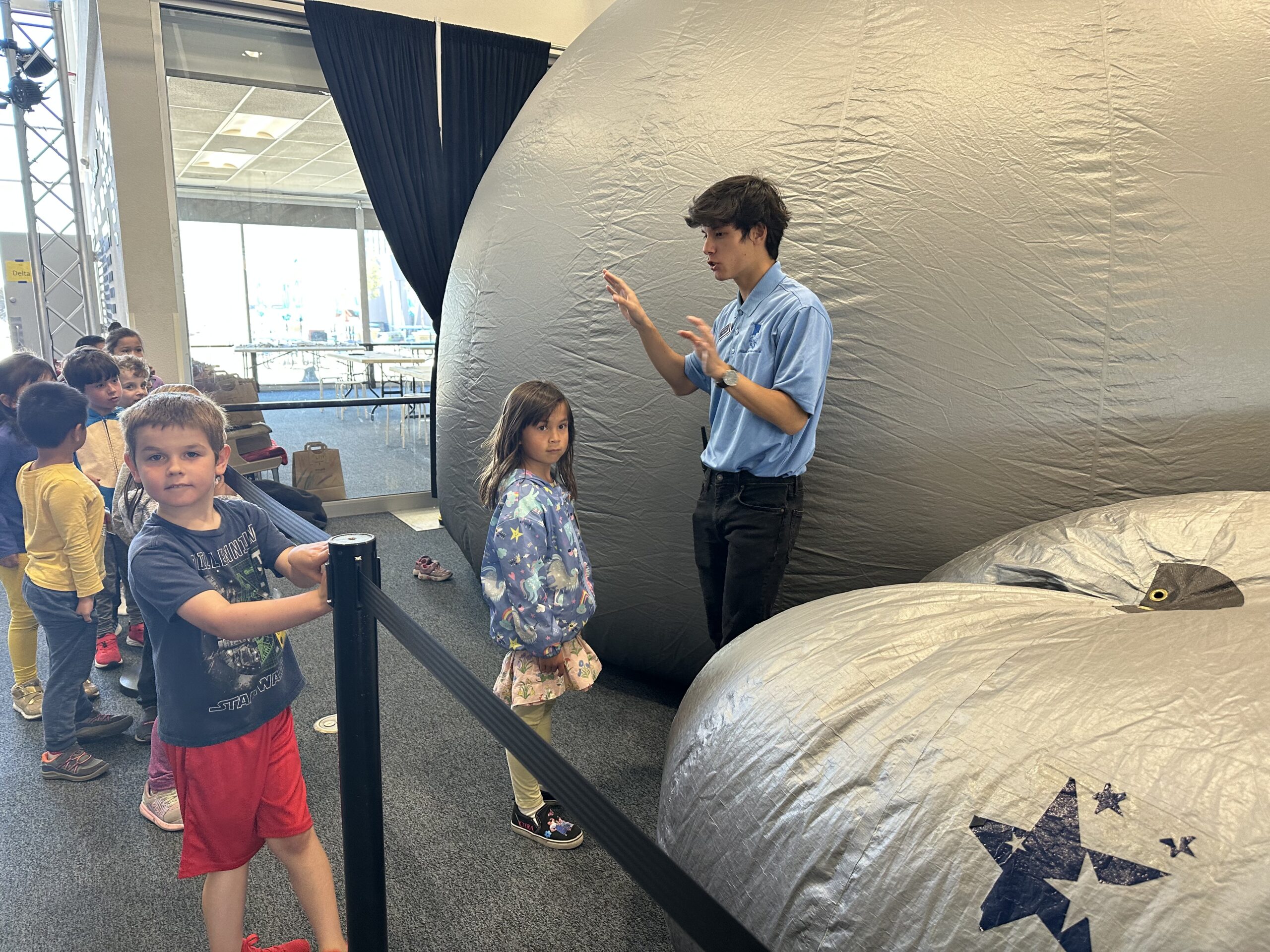
Planetarium
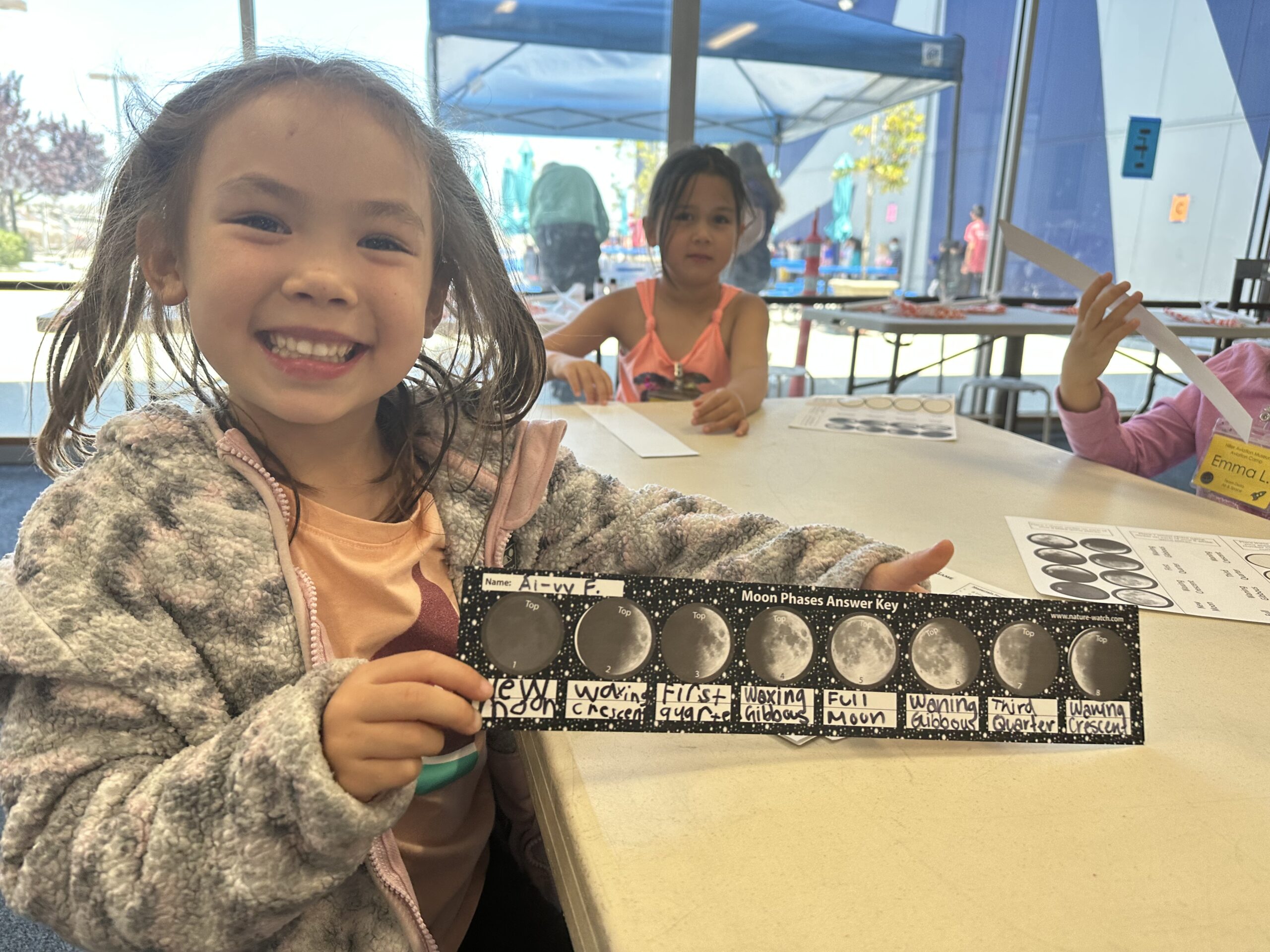
Moon Phases