
Hiller Aviation Museum
Land, Sea, & Air
Explore Science & Engineering
with Hands-On Experiments!
Land, Sea, & Air Camp Details
New for 2026!
Delve into science and nature with volcanoes, the ocean, the forest, the atmosphere, animal flight, aviation, and more!
Observe how weather affect flights and see how wind moves over different wing shapes. Create chemical reactions with volcano experiments while learning about the earth’s layers. Complete electrical circuits with human touch. Observe camoflauge from sea to sky.
Camp Details
Land, Sea, & Air Sessions
- June 15-19, 2026 waitlist
- June 29 – July 2, 2026 (4-days)
- June 29 – July 3, 2026 (5-days) waitlist
- July 13-17, 2026
- July 27-31, 2026
- August 10-14, 2026
- August 24-28, 2026
See Camp Calendar for availability.
EXAMPLE OF LAND, SEA, & AIR CURRICULUM
LESSON |
DESCRIPTION |
| Amphibious | Learned about amphibian life cycles and explored how they influence engineering design. |
| Antartic Animals | Explored Antarctic animals and their lifestyles, with a special focus on penguins. |
| Bridges | Learned about bridge engineering and built self-supporting Da Vinci bridges. |
| Camoflauge | Explored how animal camouflage has inspired the development of human camouflage. |
| Caves | Learned about caves and erosion by building a clay cave and simulating water erosion. |
| Circuits | Explored open and closed circuits and experimented with energy using plasma balls, lightbulbs, and human interaction. |
| Currents | Learned how temperature influences ocean currents. |
| Drone Plex | Flew a simulated quadcopter and piloted an actual drone through the Drone Plex. |
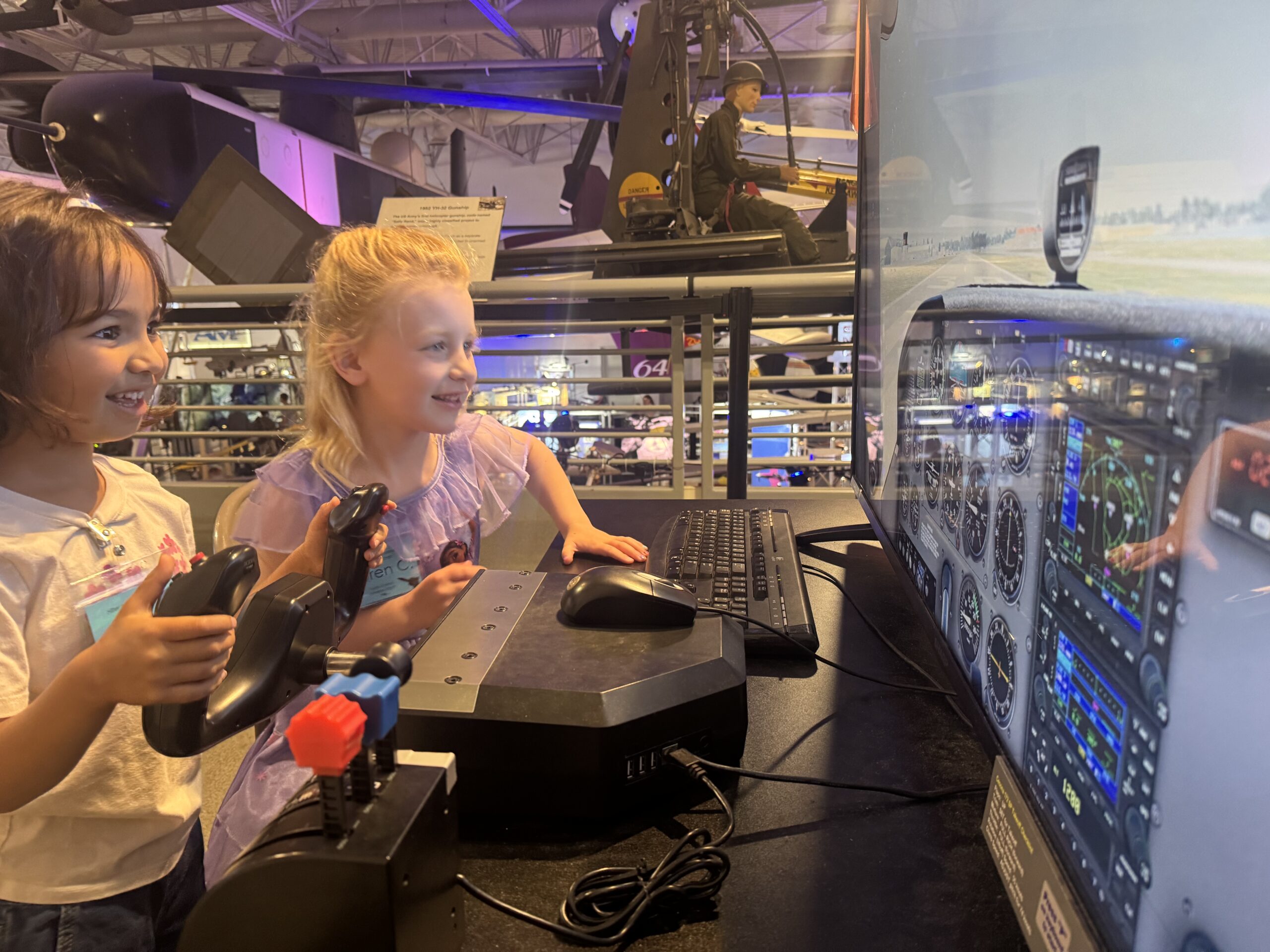
| Flight Sims: Intro | Completed introductory flight simulations learning how to fly straight and level, land, and take-off. |
| Flight Sims: STOL | Flew and landed a simulated aircraft on short runways |
| Flying Fish | learned about flying fish and how they are able to glide through the air. |
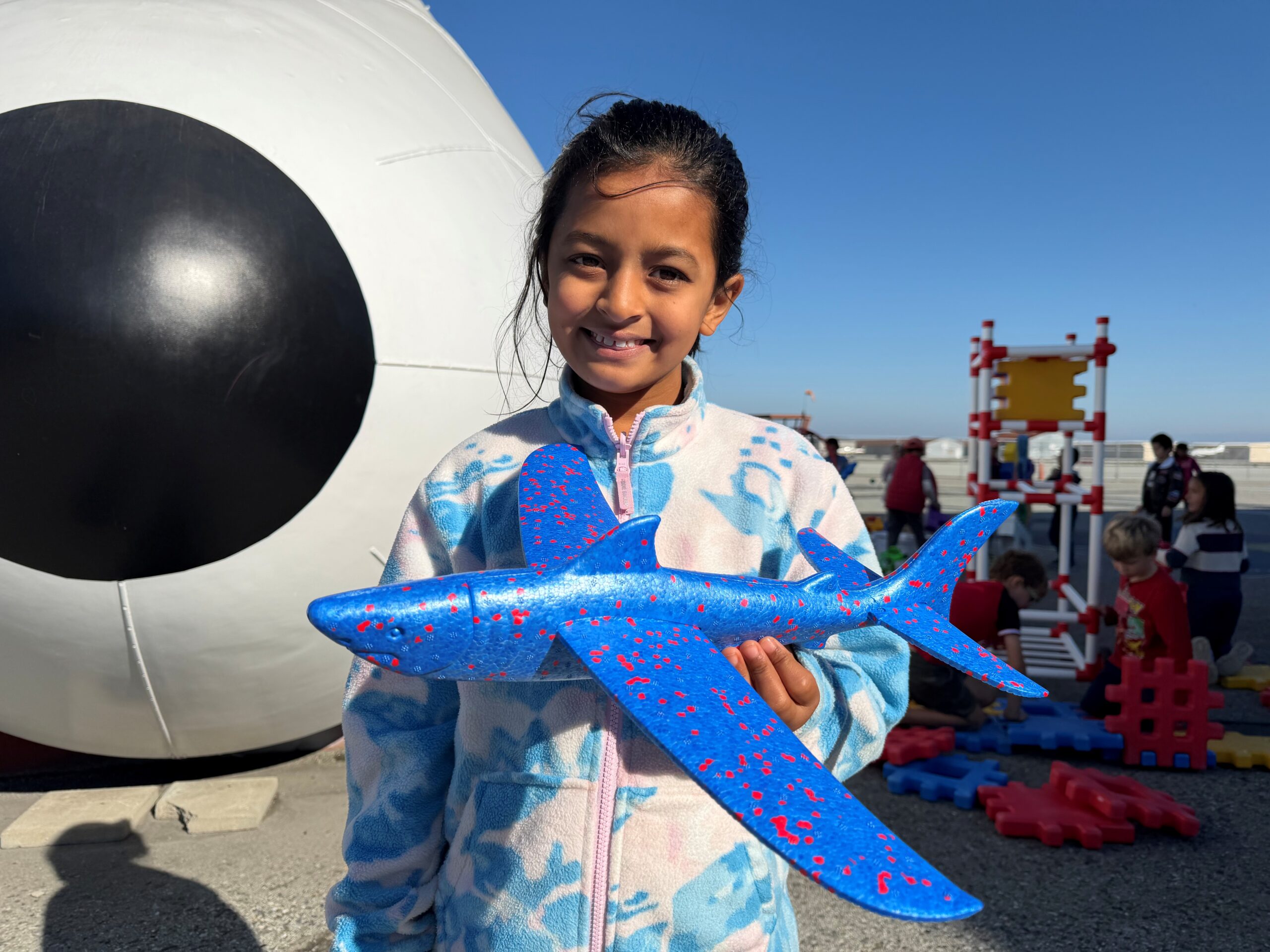
| Gliders – Shark | Explored glider flight and launched their own shark-shaped glider. |
| Insects | Learned about insects, their life cycles, and the science behind their wings. |
| Magnets – Experiment | Explored magnetism and investigated how magnetic fields work. |
| Ocean Life Zone | Explored ocean life at different depths and conducted experiments to observe how visibility changes under different conditions. |
| Seashells | Explored seashells, the animals that inhabit them, and how ocean acidification impacts their survival. |
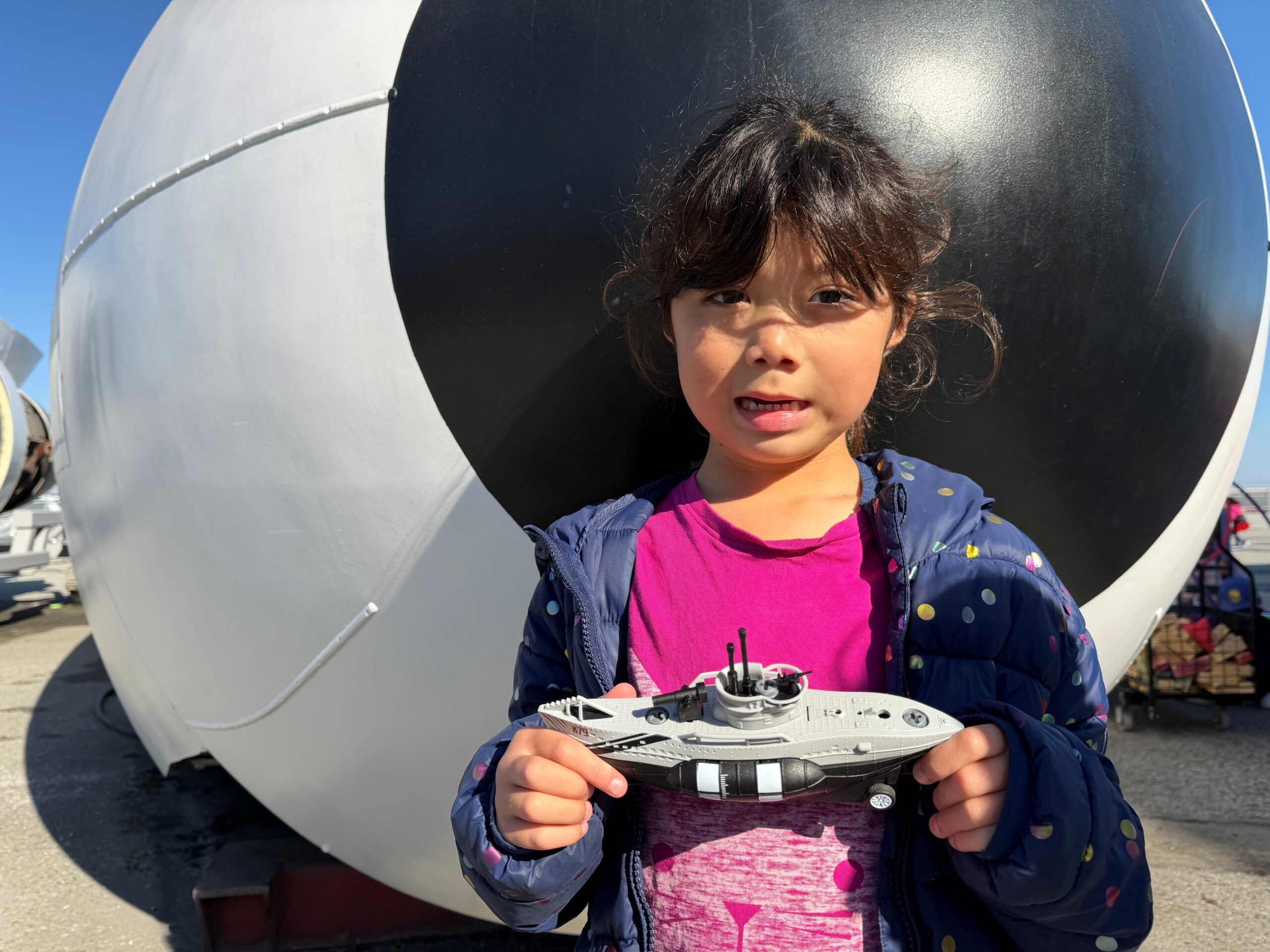
| Submarines | Learned about submarines and investigated buoyancy through hands-on experiments. |
| Volcanoes | Investigated volcanoes and created chemical reactions using baking soda and vinegar to simulate eruptions. |
| Weather Station | Learned about daily and seasonal weather, explored weather instruments, and built their own weather station. |
| Whales | Learned about whales and their evolutionary adaptations, including the differences between toothed and baleen whales. |
Land, Sea, & Air Camp Includes
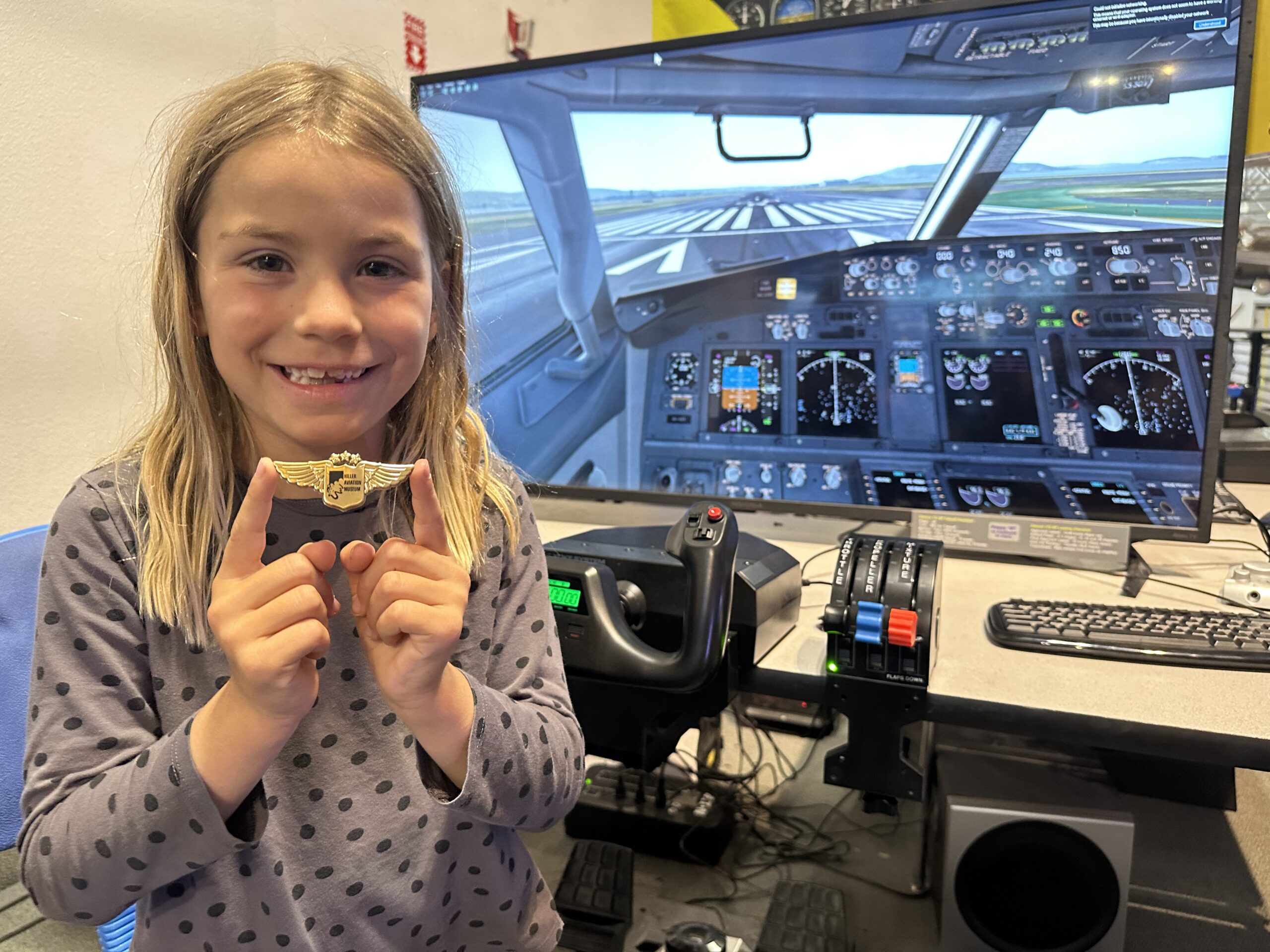
Flight Simulation
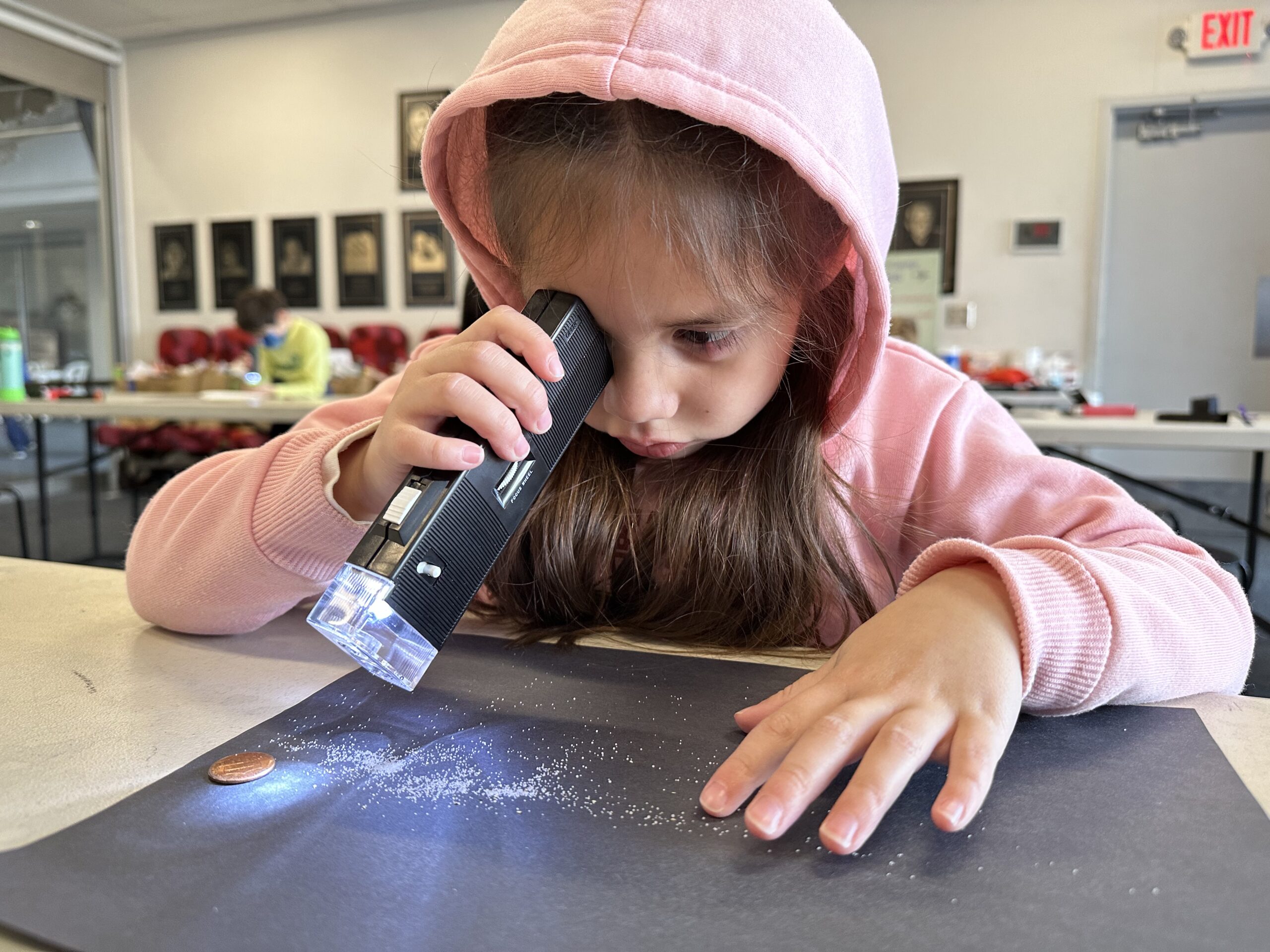
Science
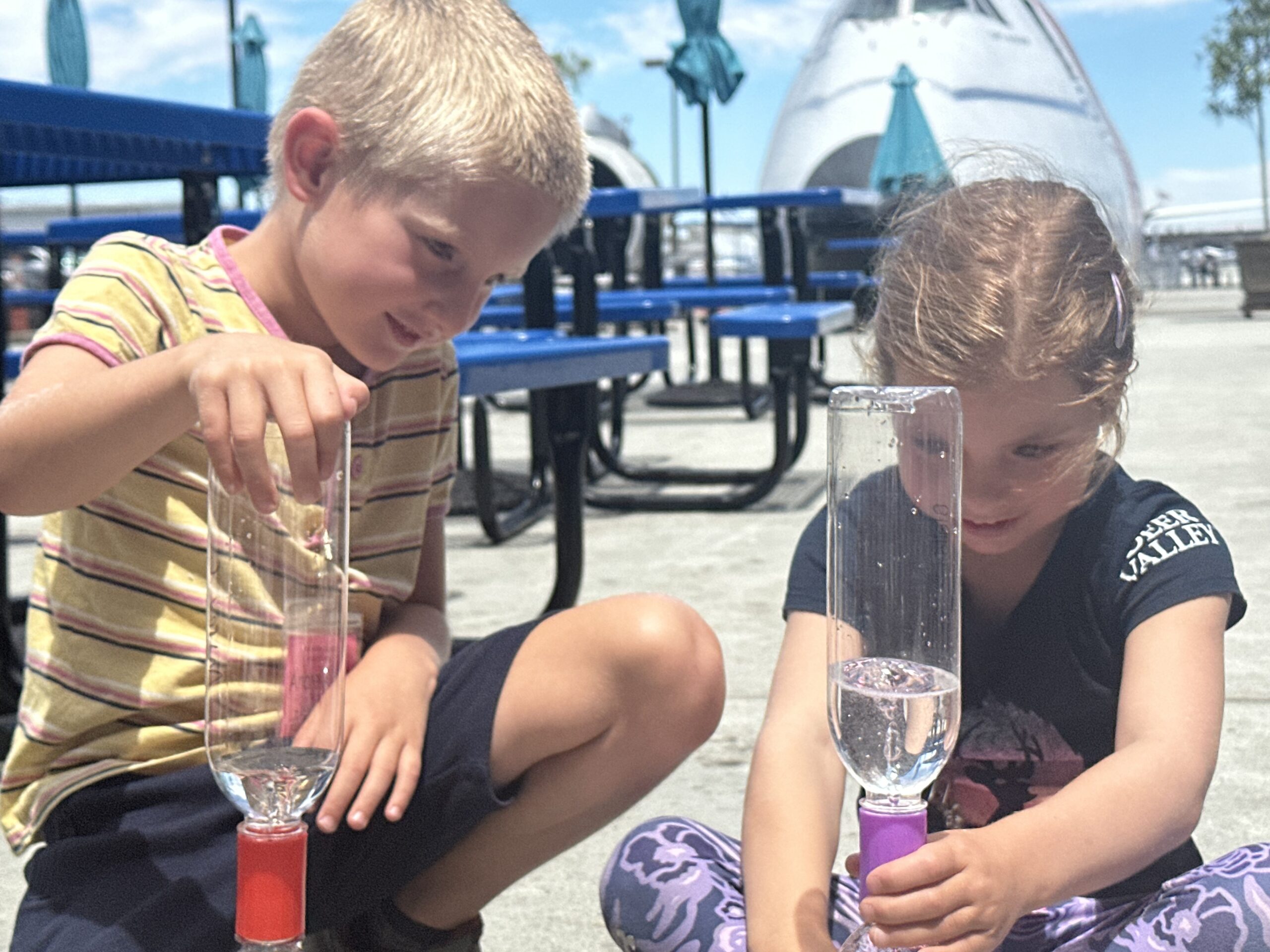
Weather
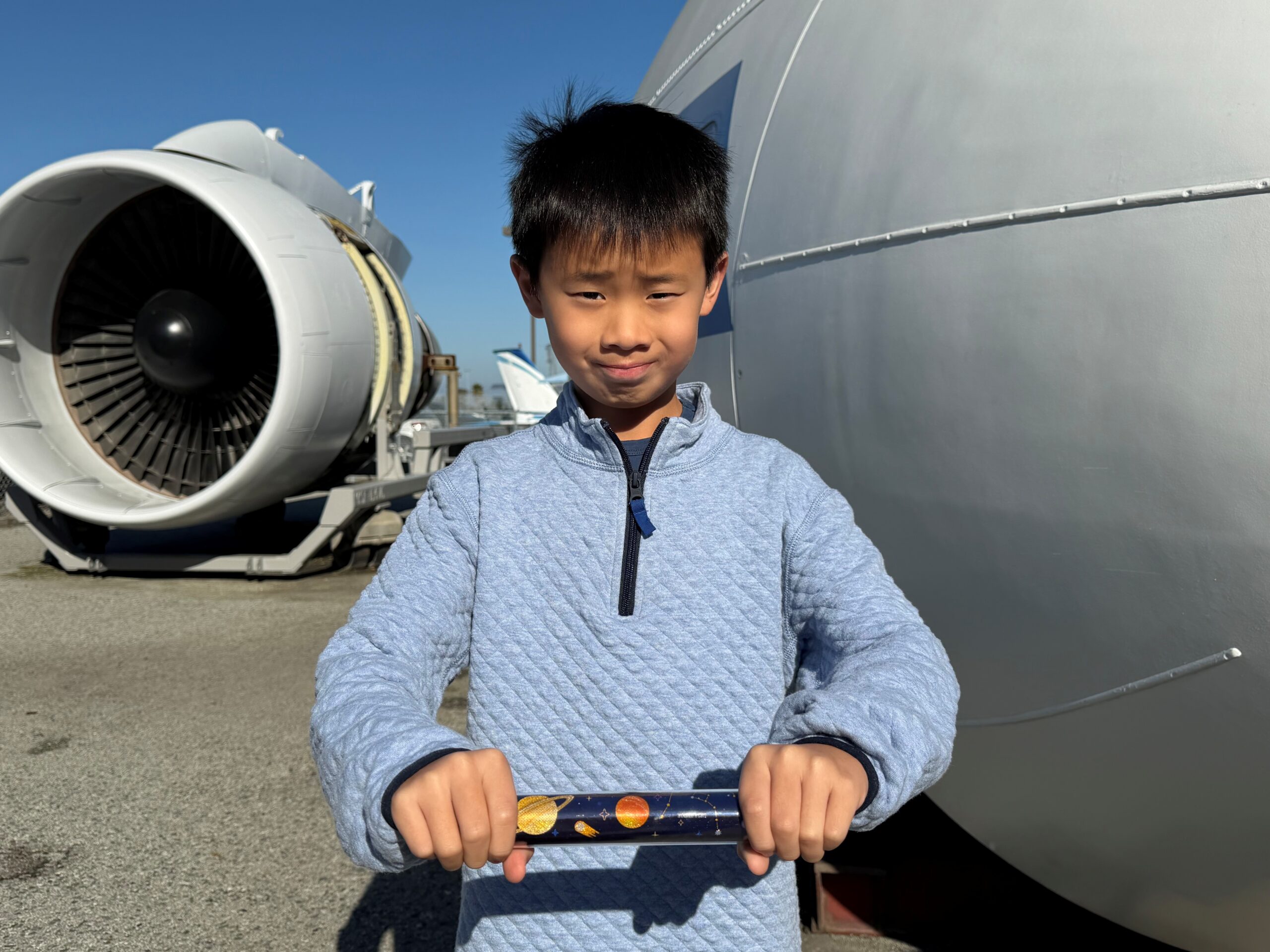
Camp Daily Schedule
Camps meet full day, 9 AM – 4 PM.
Regular camp check-in begins at 8:30 AM, and check-out ends at 4:15 PM.
Extended PM hours are available for select sessions. PM Care end times and fees vary by session. See registration page for details.
The camp day is split into 4 activity sessions with a recess/meal break in between each session. Children will be assigned to discrete teams and remain with their team and the same instructional staff for the entire session.