Beachey-Eaton Biplane
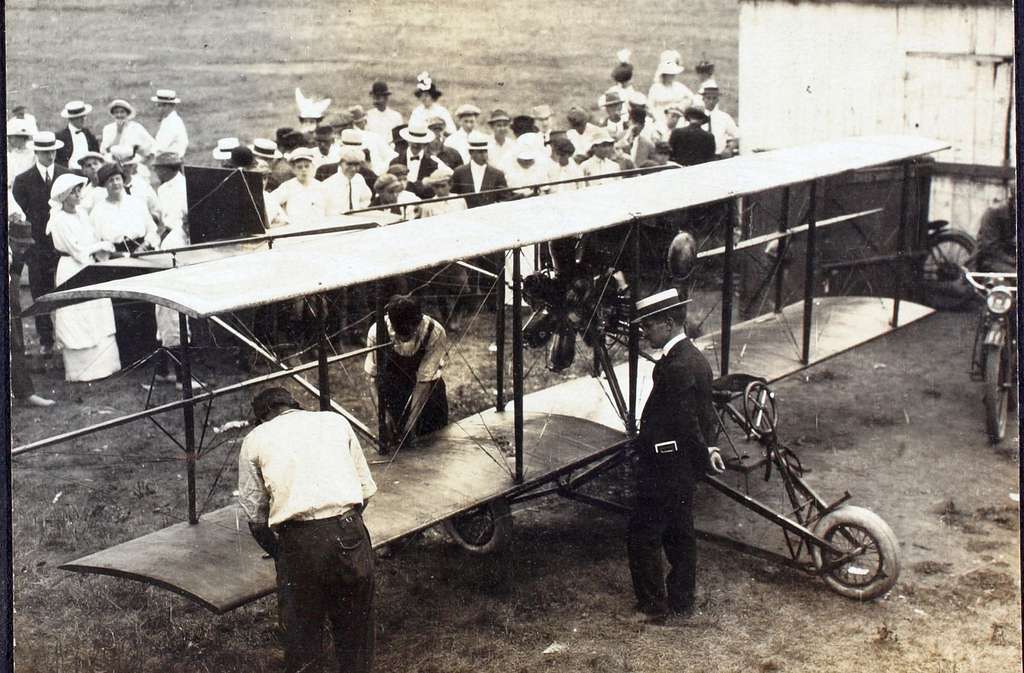
San Francisco native Lincoln Beachey had established himself as a demonstration pilot working for Glenn Curtiss by the early 1910s. During one set of flight demonstrations his “double ended” Curtiss Pusher, equipped with both forward and rear horizontal stabilizers, was damaged. Beachey had the damaged forward stabilizer removed and soon came to prefer “headless” airplanes. Early aircraft with pusher propellers placed the pilot in an exposed position at the front of the airplane, and with the forward stabilizers removed Beachey gained an exceptional feel for the airplane’s speed and attitude.
After parting ways with Curtiss after the 1913 flying season, Beachey partnered with aircraft designer Warren Eaton to create an airplane able to routinely complete rigorous aerobatic maneuvers. The resulting one of a kind Beachey-Eaton Biplane had exceptional performance, with a reinforced structure able to sustain strong g-forces and an 80-horsepower Gnome Lambdas rotary engine providing more than adequate power.
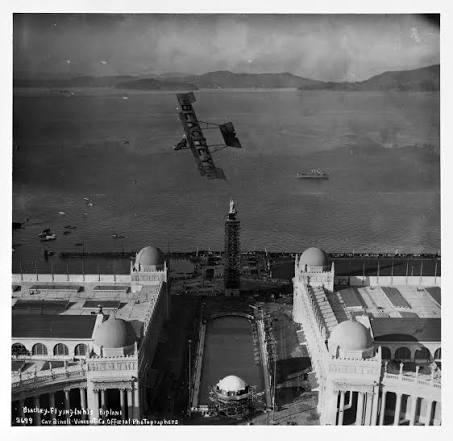
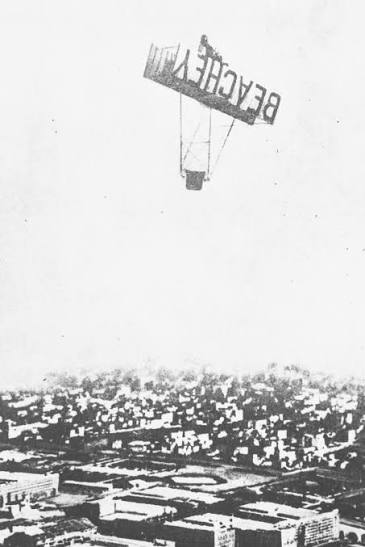
Beachey, already famous for his exploits, became a sensation flying the new airplane. It could effortlessly complete the inside loop, a feat few Americans had seen. During a nationwide tour in 1914, Beachey flew routines that regularly included dozens of consecutive loops – leading the Beachey-Eaton Biplane to become known as the “Little Looper”.
Beachey performed many demonstrations in his native San Francisco, where the Little Looper was a commonplace sight in 1914. As one of the leading pilots of his day Beachey was contracted to make daily demonstration flights during the Panama Pacific Exhibition, held in San Francisco in early 1915. By this time Beachey had begun flying the new Beachey-Eaton Monoplane, which featured a tractor propeller in front of the pilot and an enclosed cockpit. It was in this aircraft, not the Little Looper that Beachey suffered a catastrophic structural failure during an exhibition flight on March 14, 1915, resulting in a fatal crash into San Francisco Bay just offshore from the Exhibition.
The original Little Looper was lost to the historical record sometime after Beachey’s fatal crash. The Hiller Aviation Museum exhibits a full scale replica configured as Beachey flew the original during his 1914 national tour.
Specifications
Capacity: 1 pilot
Powerplant: Gnome 7 Lambda, 80 hp
Cruise Speed: 70 knots